
Introduction
Millions of people across the globe start their day with one beverage, i.e. coffee. While being in the hearts of so many, few know the coffee roasting process. From seed to cup, the dark roast coffee process takes flavourless beans and turns them into the aromatic beverage we love.
The coffee roasting process brings out nuanced flavours, textures, and aromas. The roasting process of coffee caters to every palate; whether you prefer a balanced medium coffee roast or a bold, rich intensity of a dark coffee roast, the knowledge of the coffee roasting process and how roasting affects acidity and taste might help you appreciate your favourite beverage even more.
This blog dives into the different coffee roasting methods and how they impact flavour. From drying to Development, the process of roasting coffee beans takes you through every critical stage that transforms a raw green bean into a rich, aromatic brew. We’ll walk you through the physical and chemical changes that occur inside the bean, shaping its acidity, body, and taste profile. You will also understand these roasting stages in detail when you enroll in a professional barista course in Mumbai, where theory meets hands-on practice.
Understanding the Coffee Roasting Process
The process of roasting coffee beans creates an aromatic brown coffee bean ready for brewing. It is accomplished by transforming the green coffee seed through chemical and physical processes that occur as a result of applying heat.
In the first stage of the coffee roasting process, the water evaporates from the bean, causing the sugars and amino acids to begin to react (this is called the Maillard reaction) and develop flavour compounds into the coffee beans.
The time and temperature of roasting are the two characteristics that dictate the quality of the coffee bean after the coffee roasting process. Roasting at lower temperatures and less time will typically preserve a larger percentage of the coffee bean’s original acidity and distinct flavours than higher temperatures/roasting times.
There is a delicate balance between heat, time, and the type of coffee bean that determines the final characteristics of the roasted coffee.
Also Read: A Guide To Making Perfect Latte Art
What is the process of roasting coffee beans?
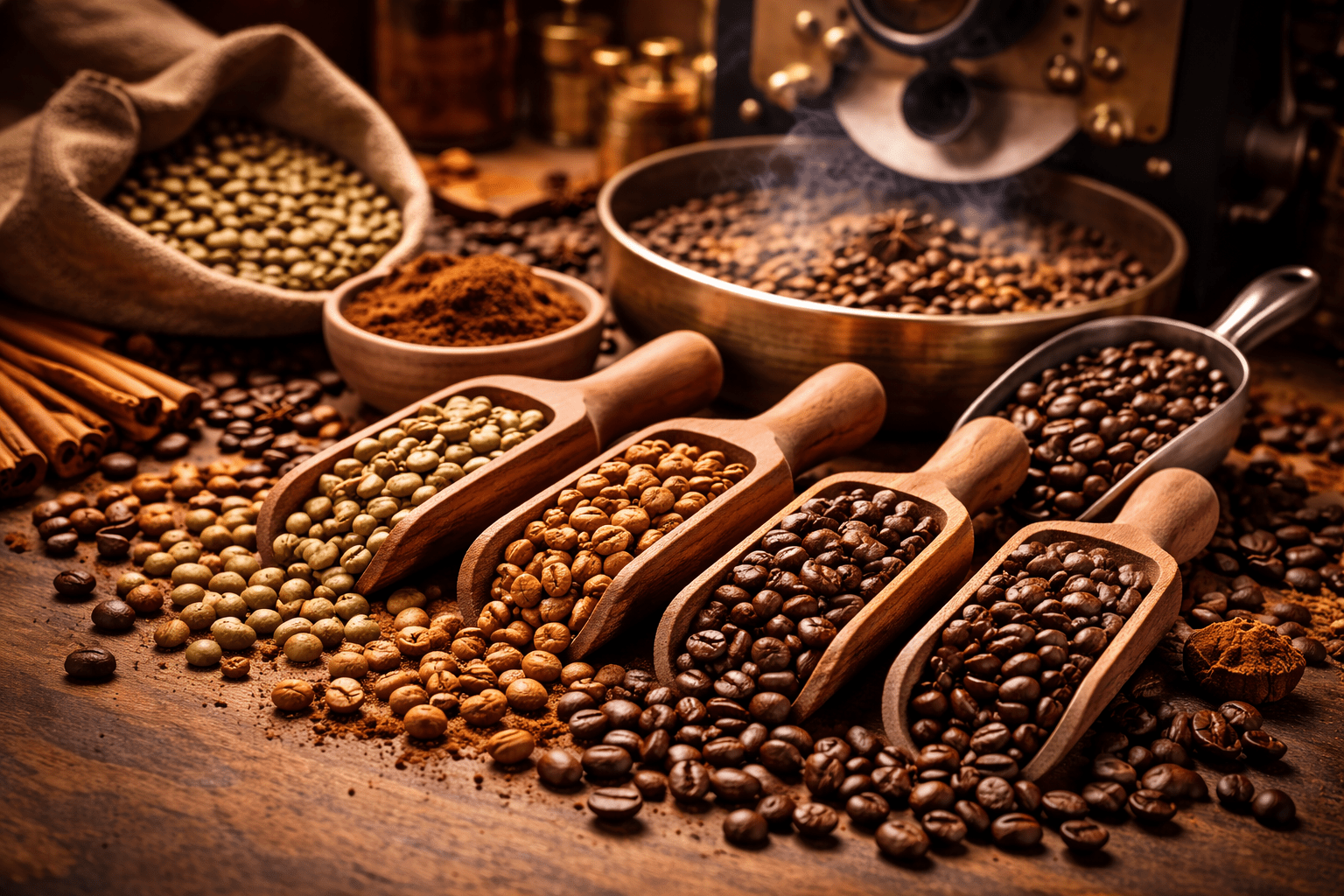
The process of roasting coffee beans controls how chemical reactions are initiated and therefore their aroma, flavor & color. Coffee beans start out looking green, smelling like grass, and having no taste. As they are roasted, the process of roasting coffee beans unlocks different aromas and flavors.
The moisture within the beans evaporates in stage two, and the beans begin smelling like lightly toasted bread. The Maillard reaction creates flavours and fragrances like caramel, nuts, chocolate, and spices.
The next process of roasting coffee beans creates the “first crack”. It deepens the flavor further. A bolder, stronger aroma is released. By the “second crack”, the caramelization has increased, and the acidity has reduced.
In the process of roasting coffee beans, aspects like temperature and airflow determine the shape, aroma, and flavour of the coffee. So, coffee roasters take these things very seriously.
Also Read: Easy Gin Cocktails Recipe
Different Coffee Roasting Methods
There are several different coffee roasting methods used today, each one affecting how the finished coffee will taste and how the finished cup will taste.
- Drum Roasting
The coffee beans are placed into a large stainless steel drum and rotated using a handle on the outside. This method allows for a more consistent roast, and it caramelizes and builds the body of the coffee.
Since the dried outer husk of the coffee bean is caught inside the drum, this type of different coffee roasting methods generally produces heavier, smoky notes as well as a more complex and deep taste.
A well-experienced roaster will have perfected their coffee roasting process skill to produce roasts that are rich and complex; controlling consistency from each batch of coffee will take several months or years of experience.
- Air Roasting (Fluid Bed)
One of the types of coffee roasting is Air Roasting. Hot air is blown through a perforated plate onto the coffee beans, causing them to be roasted evenly.
Due to the fact that hot air is removing the chaff before it can come in contact with the roaster’s hot metal drum, this process of roasting coffee beans creates a cleaner & brighter acidity with a lighter body and crisper flavours.
Different coffee roasting methods create various different chemical compounds as they are created to produce coffee, so you should consider how your choice will affect your finished beverage.
Also Read: Types of Martini Cocktail Drinks
Types of coffee roasting
Let’s look at the 3 most common coffee roast profiles: light coffee roast, medium coffee roast, and dark coffee roast. The various types of coffee roasting provide different flavours, levels of acidity, and aromas.
Light Coffee Roast
A light coffee roast creates beans that are light brown in colour (no oil on the surface). In these types of coffee roasting, the beans are typically roasted until shortly after the first pop occurs, when the beans’ cell walls break and form sugar.
Light coffee roast has the following characteristics:
- High acidity that is bright and lively
- Light-bodied with crisp flavour profiles
- Fruity, floral, and citrus notes
Since light coffee roast requires a shorter cooking time at high temperatures, many coffee beans retain their flavour properties, like sweet acidity. This makes these types of coffee roasting ideal for brewing techniques like pour-over or Aeropress that emphasize subtle flavours.
Medium Coffee Roast
A medium coffee roast provides a happy medium between light and dark. These types of coffee roasting lead to a medium-brown colour and deliver much more of a balanced flavour.
Medium coffee roasts have the following characteristics:
- Acidity and sweetness perfectly balanced
- Creamy body with rounded flavour profiles
- Nutty, chocolate, and/or caramel flavours
Medium coffee roast retains some of the original flavours from the bean along with the flavours developed during the roasting process. These types of coffee roasting are ideal for making espresso, drip, or French Press.
Dark Coffee Roast
When comparing dark coffee roasts with lighter roasts, dark roasts tend to have the strongest flavours and the lowest acidity. Dark coffee roast beans are the darkest in colour (usually very dark brown to black) and may have oil on the exterior of the beans.
Dark coffee roast characteristics:
- Lower Acidity
- Bold, rich, and smoky flavours (some may taste bittersweet)
- Heavy bodied
Dark coffee roast beans have developed their dominant flavour from roasting rather than from growing years. These types of coffee roasting lead to flavours like deep chocolate, caramelized sugar, smoky or roasted flavours.
Because of the long exposure of the coffee beans to heat during roasting, a lot of acidic compounds are broken down, lowering the acidity of dark coffee roast and increasing the strength and fullness of the coffee.
Coffee Bean Roast Levels and Their Impact
Coffee bean roast levels explain how roasting changes more factors other than colour.
Roast level affects acidity, caffeine, and body in distinctive ways.
| ROAST LEVEL | ACIDITY | BODY | FLAVOR NOTES | CAFFEINE* |
| Light Coffee Roast | High | Light | Fruity, Bright, Floral | Slightly Higher |
| Medium Coffee Roast | Medium | Medium | Balanced, Sweet, Smooth | Moderate |
| Dark Coffee Roast | Low | Bold/Heavy | Smoky, Rich, Deep Notes | Slightly Lower |
The intensity of the caffeine content is determined by the bean type and brew method. Generally speaking, light coffee roasts and dark coffee roasts are similar by weight.
Coffee roasting level also impacts how you perceive your coffee.
- Light coffee roasts keep acids, and origin notes front and centre.
- Medium coffee roasts offer a balanced experience with sweetness and body.
- Dark coffee roasts lean into rich, bold flavours with muted acidity.
This table helps visualize how different roast levels translate into sensory experiences for coffee lovers.
Also Read: 10 Types of Cocktails: A Beginner-Friendly Guide For Future Bartenders
How The Coffee Roasting Process Affects Acidity and Taste
The process of roasting coffee beans changes their chemical makeup. The longer the coffee roasting process, the more the acids break down, resulting in less acidity. With light coffee roasts, you will retain a higher percentage of these acids, which results in coffees that taste fresher and brighter.
With dark coffee roasts, the beans are exposed to higher temperatures for longer periods of time. As a result, the amount of acid that breaks down during the coffee roasting process is greater than with lighter roasts. In the case of dark coffee roast, this results in a much smoother and richer cup of coffee, but often with more of a bitter, chocolatey, smoky or caramel flavours.
There is a great range of different flavour profiles of coffee depending on the coffee bean roast levels:
- Fruity and tangy when it’s a light coffee roast
- Nutty and sweet when it is a medium coffee roast
- Smoky, bold and rich when it’s a dark coffee roast
By understanding the above it is possible to choose your preferred type of coffee based on your own personal taste preference, whether that is bright and zesty or deep and intense.
Also Read: Top 10 Bar Design Trends
Choosing the Right Roast for Your Taste
When considering different coffee roasting methods, think about what flavour profile suits the brew style you like.
- For bright acidity combined with more subtle flavors choose a light roast. A light coffee roast is perfect for pour-over and filter methods.
- If you prefer balanced sweetness and body among various types of brewing, choose a medium roast. Medium coffee roasts work well across various brew styles.
- For a bolder flavour in low acidity and stronger coffee, try using a dark coffee roast, which is great when brewed as espresso or using a cold brewing process.
Different coffee roasting methods will help you determine your “coffee type” as well as how you prefer to drink it. If you add milk, there are medium to dark roasts, but if you drink your coffee “black” you will want to choose a light coffee roast as it will give you better “clarity” in the coffee.
Conclusion
The different coffee roasting methods affect how we will define coffee as we know it! Coffee’s character comes from the process of roasting coffee beans; bright and acidic are typically the characteristics associated with a light coffee roast, whereas the strong and bold flavour of a dark coffee roast is comparable to what we would review as being rich and full-bodied.
Understanding coffee beans and the coffee roasting process, representing different roasts, will help you experience all kinds of coffee flavour combinations on the planet. When you brew your cup of joe next time, take a second to appreciate the coffee roasting process as a whole. From green beans to a hot cup of joe, don’t hesitate to test your own palate according to your unique preferences!